

Wooden Blanket & Acrylic Blanket & Cotton Blanket
6 Types Of Material For Hotel Blanket

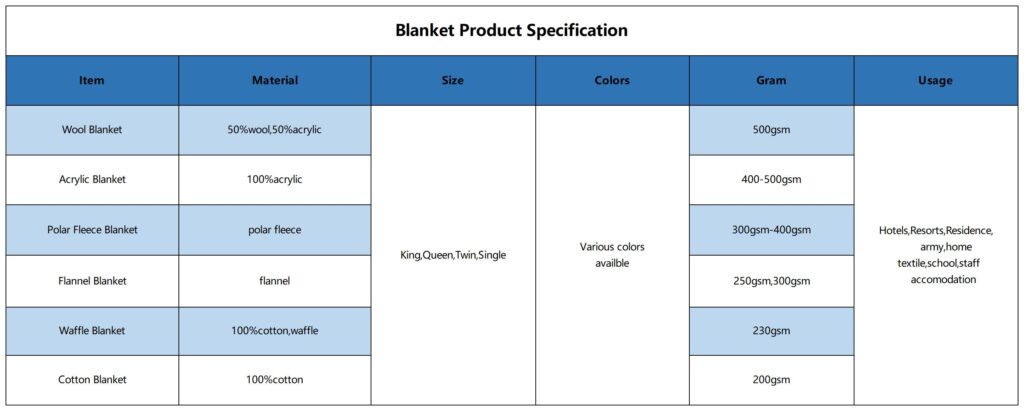
Wool Hotel Blankets
Wool blend hotel blankets designed for warmth, durability and comfortable hospitality bedding applications.

Acrylic Hotel Blankets
Acrylic hotel blankets designed for lightweight warmth and practical hospitality bedding use.
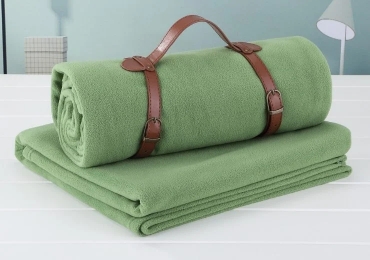
Polar Fleece Hotel Blankets
Soft polar fleece hotel blankets designed for warmth, comfort and hospitality guest room use.

Flannel Hotel Blankets
Soft flannel hotel blankets suitable for hospitality bedding, guest room comfort and seasonal hotel
use

Waffle Hotel Blankets
Lightweight waffle hotel blankets designed for summer hospitality bedding and warm climate hotel projects.

Cotton Hotel Blankets
Cotton hotel blankets designed for breathable comfort and everyday hospitality bedding
applications.
Care Instructions For Hotel Blanket
Warranty Period:
One Year/If it is not caused by artificial damage, washing damage or natural aging of the product, we will replace it without charge.
Sample:
Sample production time: 7 days.
Cost: free for samples, we can supply you samples by free to do lab test or wash test before officila order to make sure quality. For delivery cost of samples, you can provide me your express account.
Production Lead Time:
Normally we need 30 days in production for full set of bed linens ,bath linens for one hotel project, including bed sheet, duvet cover, pillow case, pillow protector, mattress protector, mattress topper, bed runner, cushion, bed skirting, towels, bathrobe, slippers.If something urgently, pls contact us first to discuss.
Warranty Period:
One Year/If it is not caused by artificial damage, washing damage or natural aging of the product, we will replace it without charge.
Sample:
Sample production time: 7 days.
Cost: free for samples, we can supply you samples by free to do lab test or wash test before officila order to make sure quality. For delivery cost of samples, you can provide me your express account.
Production Lead Time:
Normally we need 30 days in production for full set of bed linens ,bath linens for one hotel project, including bed sheet, duvet cover, pillow case, pillow protector, mattress protector, mattress topper, bed runner, cushion, bed skirting, towels, bathrobe, slippers.If something urgently, pls contact us first to discuss.
Hotel Blanket Collection
Commercial hotel blankets designed for hotels, resorts, serviced apartments and hospitality bedding projects.
Available in wool, fleece, flannel, waffle and cotton materials for different hospitality environments and seasonal bedding requirements.
1. What Is a Hotel Blanket?
A hotel blanket is an extra layer designed to provide warmth, comfort, and seasonal flexibility for hotel guests. Unlike decorative throws used at home, hotel blankets are developed for frequent commercial laundering, long-term durability, and consistent guest experience.
Hotels usually use blankets as an additional bedding layer together with duvet inserts and duvet covers, especially in colder regions, mountain resorts, serviced apartments, and properties that need flexible bedding solutions for different seasons.
At Hotelweave, we manufacture hotel blankets in a wide range of materials including wool blend blankets, fleece blankets, cotton waffle blankets, acrylic blankets, and microfiber blankets for hotels, resorts, hospitals, serviced apartments, and hospitality projects worldwide.
2. Which Blankets Are Most Durable For Hotels?
For commercial hospitality use, durability depends more on material structure and laundry performance than softness alone.
Polyester fleece blankets and acrylic blend blankets are widely used in budget and mid-scale hotels because they are affordable, lightweight, easy to wash, and resistant to frequent industrial laundering.
For higher-end hospitality projects, wool blend hotel blankets are often preferred because they combine warmth, breathability, and longer service life.
Hotels should also consider:
- resistance to pilling
- shrinkage control
- color fastness
- edge stitching quality
- industrial washing performance
A well-made commercial hotel blanket should maintain its shape and warmth after repeated washing cycles.
3. Is GSM Important When Choosing Hotel Blankets?
Yes. GSM (grams per square meter) is one of the most important factors when selecting hotel blankets.
In simple terms:
- lower GSM blankets are lighter and cooler
- higher GSM blankets are thicker and warmer
For example:
- 250–350 GSM blankets are commonly used in warm climates and summer seasons
- 400–550 GSM blankets are popular in luxury hotels and colder regions
- heavy wool blankets above 550 GSM are often used in winter resorts or mountain hotels
However, GSM alone does not determine quality. A lower-quality blanket with high GSM may still perform poorly after washing. Professional hotel buyers should evaluate both fabric quality and construction.
4. What Type Of Blankets Do Hotels Usually Use?
Different hotels choose different blanket types based on climate, budget, guest positioning, and laundry requirements.
Common hotel blanket types include:
- wool blend blankets
- fleece blankets
- microfiber blankets
- acrylic blankets
- cotton waffle blankets
- flannel blankets
Luxury hotels usually focus on warmth, texture, and guest comfort, while economy hotels often prioritize durability and easy maintenance.
Some hotels also use decorative throws or lightweight blankets as part of the room styling and branding experience.
5. How Do Hotels Choose The Correct Blanket Size?
Hotel blankets should fully cover the mattress while still looking clean and balanced on the bed.
Most hospitality buyers select blankets slightly larger than the mattress size to improve appearance and guest comfort.
A hotel blanket should:
- cover both sides of the mattress properly
- allow enough drop on each side
- not drag excessively onto the floor
- remain easy for housekeeping staff to handle
For hospitality projects, we usually recommend confirming mattress height, bed dimensions, and room style before production.
6. What Are Common Hotel Blanket Sizes?
Below are some commonly used hotel blanket sizes:
- Single: 150×200cm
- Twin: 180×230cm
- Double: 200×230cm
- Queen: 220×230cm
- King: 260×230cm
Custom blanket sizes for hotels are also widely available depending on the market and project requirements.
At Hotelweave, we support custom hotel blanket sizes for resorts, hotel chains, hospitals, serviced apartments, and hospitality wholesalers.
7. How Long Do Hotel Blankets Last?
The lifespan of a hotel blanket depends on:
- fabric quality
- frequency of use
- washing conditions
- drying temperature
- storage environment
Commercial-grade hotel blankets can typically last several years under proper hospitality laundry management.
Wool blankets generally have a longer lifespan than lightweight synthetic blankets, while microfiber blankets are more economical and easier to replace.
Proper industrial washing procedures significantly improve blanket longevity.
8. Do Hotels Use Microfiber Blankets?
Yes. Many hotels use microfiber blankets because they are:
- budget-friendly
- lightweight
- soft to the touch
- easy to wash
- quick drying
Microfiber blankets are commonly used in:
- economy hotels
- serviced apartments
- student accommodation
- healthcare projects
- high-volume hospitality operations
Although microfiber blankets are less breathable than wool or cotton blankets, they provide good practicality and lower replacement cost.
9. What Are The Advantages Of Hotel Blankets?
Hotel blankets provide several important benefits in hospitality environments.
A good blanket helps hotels improve:
- guest comfort
- warmth during colder seasons
- bedding flexibility
- room presentation
- sleep quality
For many guests, warmth and comfort directly affect the overall hotel experience and online reviews.
Hotels also use blankets to quickly adapt to changing weather without replacing the entire bedding system.
10. How Do Hotels Choose Warm Blankets?
When selecting warm hotel blankets, buyers usually evaluate two key factors:
Blanket Material
Wool blankets provide excellent insulation and breathability.
Fleece and acrylic blankets offer lightweight warmth and easier maintenance.
Cotton waffle blankets are more breathable and suitable for warmer climates.
Blanket GSM
Generally:
- 400 GSM blankets provide moderate warmth
- 500–550 GSM blankets offer stronger insulation
- heavier blankets are preferred for cold regions and winter hospitality use
Climate, laundry conditions, and target guest experience should all be considered together.
11. What Are The Most Common Blanket Materials Used In Hotels?
Common hospitality blanket materials include:
- wool blend blankets
- acrylic blankets
- fleece blankets
- microfiber blankets
- flannel blankets
- cotton waffle blankets
Luxury hotels often prefer wool or wool blend blankets because they offer better warmth and a more premium feel.
Mid-scale and economy hotels usually choose acrylic or fleece blankets for better cost efficiency and easier commercial laundering.
12. Why Are Blankets Important In Hotels?
After a long flight, business trip, or full day of travel, guests expect a warm and comfortable sleeping environment.
Hotel blankets help create:
- physical comfort
- warmth
- emotional relaxation
- a more welcoming room atmosphere
Unlike ordinary household blankets, commercial hotel blankets must also balance durability, easy maintenance, and operational efficiency.
For hotels in colder climates, blankets remain an essential part of the bedding system even when duvets are already used.
13. Do Hotels Offer Different Blanket Options To Guests?
Most hotels standardize one blanket specification for operational efficiency and easier laundry management.
However, some luxury hotels and resorts may provide:
- lightweight blankets
- heavier winter blankets
- hypoallergenic blankets
- extra blankets upon request
Hospitality projects serving international guests often keep additional blanket options available for different climate preferences.
14. What Blanket Materials Do Luxury Hotels Prefer?
Many luxury hotels prefer wool blend blankets with GSM between 500–550 GSM because they provide:
- better insulation
- premium appearance
- longer service life
- improved breathability
Some upscale resorts also use cotton waffle blankets or layered bedding systems to create a more luxurious sleeping experience.
The final selection usually depends on climate, room positioning, and guest expectations.
15. Are Hotel Blankets Hypoallergenic?
Yes. Certain blanket materials are naturally more hypoallergenic than others.
Popular hypoallergenic hotel blanket materials include:
- cotton waffle blankets
- microfiber blankets
- certain wool blends
Hotels serving allergy-sensitive guests often select low-lint and easy-to-clean blanket materials.
16. Are Wool Blankets The Warmest?
Wool is considered one of the best natural insulation materials for hotel blankets.
Wool blankets provide:
- excellent warmth
- strong breathability
- moisture control
- long service life
Unlike some synthetic materials, wool helps regulate body temperature rather than trapping excessive heat.
This is why wool blankets are widely used in luxury hotels, winter resorts, and cold-climate hospitality projects.
17. Which Blanket Material Is Best For Winter Hotels?
For winter hospitality use, wool blankets and wool blend blankets are usually the best choice.
They provide:
- stable warmth
- breathability
- moisture resistance
- better guest comfort during colder nights
Heavy fleece blankets are also commonly used for cost-sensitive hospitality projects.
18. How Can You Identify Real Wool Blankets?
Professional textile testing is always the most reliable method.
Some buyers also use simple burn testing methods to roughly identify wool content:
- real wool typically smells similar to burnt hair or feathers
- synthetic fibers usually form hard particles after burning
For hospitality procurement, laboratory fabric testing is recommended for accurate fiber verification.
19. What Are The Advantages Of Wool Blankets?
Wool blankets are popular in hospitality because they combine warmth, comfort, and durability.
Key advantages include:
- natural temperature regulation
- strong insulation
- good breathability
- moisture absorption
- long service life
Wool blankets also provide a more premium guest experience compared with many lightweight synthetic blankets.
For luxury hotels and resorts, wool blankets help improve the overall perception of room quality.
20. What Are The Disadvantages Of Wool Blankets?
Although wool blankets offer excellent performance, they also have some limitations.
Potential disadvantages include:
- higher cost
- more delicate washing requirements
- possible shrinkage under high heat
- sensitivity for certain guests
- heavier weight compared with microfiber blankets
For this reason, some hotels choose wool blends instead of pure wool to balance comfort, durability, and operational cost.
21. Is Wool Better Than Fleece?
It depends on the hotel’s positioning and operational priorities.
Wool blankets provide:
- better insulation
- more luxurious feel
- stronger breathability
- longer service life
Fleece blankets provide:
- lower cost
- lighter weight
- easier maintenance
- faster drying
Luxury hotels often prefer wool or wool blends, while economy hotels commonly use fleece blankets for practicality and budget control.
22. Do Hotels Wash Their Own Blankets?
Some hotels operate their own laundry facilities, while others work with professional hospitality laundries.
Commercial blanket laundering requires proper temperature control, drying management, and detergent selection to avoid:
- shrinkage
- pilling
- fiber damage
- loss of softness
Industrial hospitality laundry management plays a major role in extending blanket lifespan.
23. Can Hotel Blankets Be Machine Dried?
Yes, but commercial drying temperature should be carefully controlled.
Excessive heat may cause:
- shrinkage
- fabric damage
- fiber hardening
- reduced lifespan
For wool blankets especially, low-temperature drying or professional dry cleaning is often recommended.
24. How Should Wool Blankets Be Washed?
Wool blankets absorb significant moisture during washing, making them very heavy when wet.
For hospitality use, wool blankets are usually:
- professionally dry cleaned
- washed on gentle commercial programs
- dried under controlled low temperatures
Improper washing may damage blanket structure and shorten service life.
25. What Detergent Is Safe For Wool Blankets?
Hotels should use professional wool-safe detergents designed for delicate fibers.
Avoid:
- strong bleaching agents
- aggressive chemical cleaners
- detergents containing protease enzymes
Correct detergent selection helps maintain softness, shape, and durability.
26. Why Does Wool Shrink In Hot Water?
Wool fibers are sensitive to excessive heat and aggressive washing conditions.
High temperatures may cause:
- fiber contraction
- shrinkage
- deformation
For commercial hospitality laundering, wool blankets should be washed using controlled temperatures and gentle cycles.
27. Can Fabric Softener Be Used On Wool Blankets?
Yes, suitable fabric softeners can help maintain softness and flexibility.
However, excessive softener use may reduce absorbency and affect long-term blanket performance.